Smart Uniform Textiles Are Bringing Health Monitoring to the Workplace
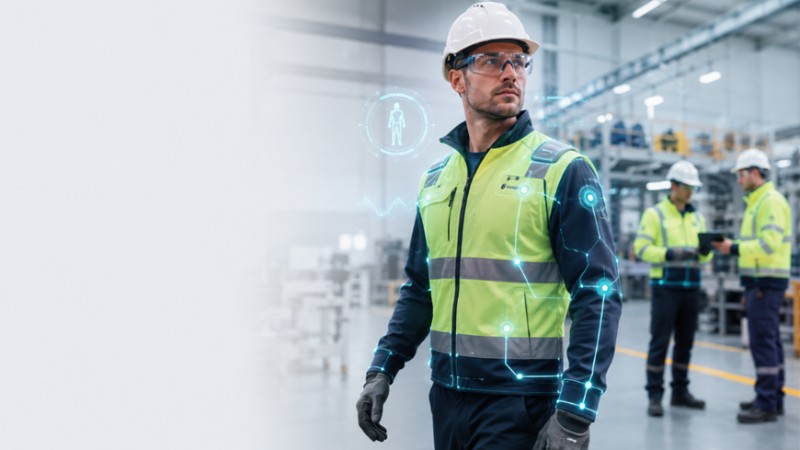
Work uniforms are starting to do more than identify a role or protect the body. In factories, construction sites, logistics hubs and high-risk industrial settings, a new generation of smart uniform textiles is being developed to monitor worker health, detect environmental risks and feed safety data back to connected systems.
It is still an emerging field. Not every “smart uniform” is ready for mass deployment. But the direction is clear: workwear is slowly becoming part of the workplace safety network.
From Protective Clothing to Connected Workwear
Traditional uniforms and PPE are designed to block hazards. Smart uniforms go further. They use textile sensors, conductive yarns, embedded electronics or wearable modules to collect data from the wearer or the surrounding environment.
That data can include heart rate, body temperature, posture, movement patterns, fatigue signals, location, heat exposure or air quality. In some systems, alerts can be sent when a worker shows signs of overheating, unsafe movement or exposure to dangerous conditions.
For employers, the appeal is obvious. Accidents often happen before a supervisor sees the risk. A connected garment can turn clothing into an early warning layer.
Why the Market Is Paying Attention Now
Several forces are pushing smart workwear closer to real-world use. Industrial labor is getting older in many markets. Heat stress is becoming a bigger risk in outdoor and warehouse jobs. Companies are also under pressure to improve safety performance while reducing downtime and insurance costs.
Market data suggests that smart PPE is no longer a niche experiment. Grand View Research estimated the global smart personal protective equipment market at more than $3.3 billion in 2025, with projected growth toward nearly $9.8 billion by 2033.
That does not mean sensor-enabled uniforms will appear everywhere overnight. But it does show that safety technology is moving from standalone devices into helmets, vests, gloves and, increasingly, textiles.
What the Fabric Can Actually Do
The most practical smart uniforms today are not science fiction garments. They are usually hybrid systems: a normal textile base combined with sensors, conductive pathways, detachable modules or washable electronic components.
In construction, connected vests can help monitor body strain and heat exposure. In logistics, location-aware uniforms may support safer movement around vehicles and machinery. In healthcare or emergency response, biometric garments can help track fatigue during long shifts.
Research is also moving deeper into the textile itself. In 2026, reports highlighted work at the University of Georgia exploring MXene-based smart textiles for construction safety. MXenes are advanced two-dimensional materials that may help fabrics sense body signals, monitor environments, resist bacteria and even support energy-related functions.
That is still a research pathway, not a standard product hanging in every warehouse. But it points to where the industry wants to go: smarter materials, fewer bulky devices, more seamless monitoring.
Real-World Examples Are Already Taking Shape
Companies such as Hexoskin and Carré Technologies have built connected garments capable of tracking biometric data, mainly in health, research and performance contexts. Myant has promoted textile computing platforms that integrate sensing into everyday garments. Sensoria has worked on sensor-enabled apparel and footwear systems.
The workwear market is different from sportswear, though. A factory uniform must survive abrasion, sweat, washing, long shifts and rough handling. It also has to be comfortable enough that workers will actually wear it.
That is where textile engineering matters. Sensors cannot simply be added as a gadget. They need to be integrated into fabric structures, seams, layers and maintenance systems without making the garment stiff, fragile or expensive.
The Hard Part Is Not the Sensor
The biggest barriers are practical.
Wash durability remains a major issue. A uniform may need dozens of industrial laundry cycles. Electronics and conductive pathways must survive that environment.
Power is another problem. Batteries add weight and maintenance work. Some developers are exploring energy harvesting, but most commercial systems still rely on modules that need charging or replacement.
Then comes data privacy. A uniform that tracks heart rate or fatigue can improve safety, but it can also feel intrusive. Clear rules are needed on what is collected, who sees it, and whether the data is used for safety support or worker surveillance.
Cost also matters. A smart uniform has to justify itself in fewer injuries, better compliance, improved productivity or lower risk exposure. Otherwise, most companies will stay with cheaper traditional PPE.
What Comes Next
Smart uniform textiles are likely to grow first in high-risk and high-value environments: construction, mining, oil and gas, energy, firefighting, logistics and healthcare. These are sectors where early warnings can prevent serious harm.
The next stage will not be about adding more sensors for the sake of it. It will be about making the technology feel invisible. Softer conductive yarns, washable sensor systems, flexible power solutions and better data platforms will decide which products move beyond pilots.
For fabric developers, the opportunity is significant. Workwear is no longer just about strength, flame resistance or visibility. It is becoming a platform for comfort, safety and real-time intelligence.
Smart uniforms will not replace helmets, gloves or safety protocols. But they may become the layer that notices a problem first.