Recycled Cotton Technologies Accelerate as Textile Waste Rules Tighten in 2026
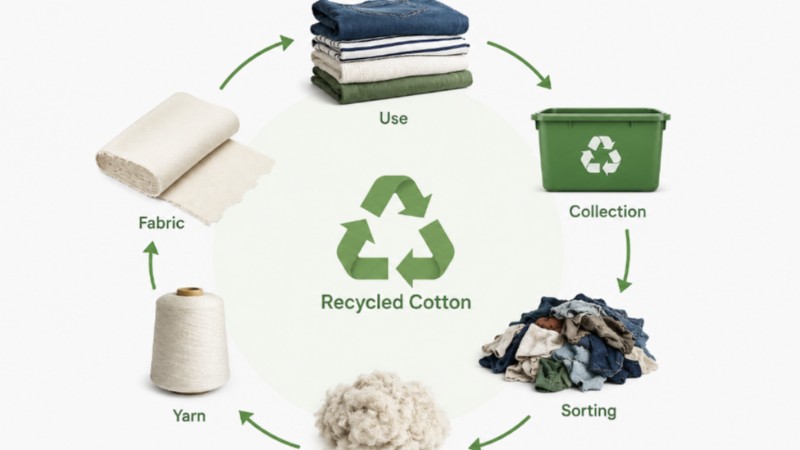
Recycled cotton is rapidly becoming a strategic material category as the textile industry faces mounting pressure to reduce waste, improve circularity, and lower dependence on virgin fibers. In 2026, stricter regulations, rising sustainability targets, and advances in textile recycling technologies are accelerating investment in recycled cotton across global apparel supply chains.
According to the World Wildlife Fund (WWF), producing a single cotton T-shirt can require approximately 2,700 liters of water, making conventional cotton production one of the industry's most resource-intensive processes.
As regulators and brands push for lower-impact materials, recycled cotton is increasingly viewed as a commercially necessary solution rather than a niche sustainability initiative.
EU Textile Regulations Continue Reshaping Material Sourcing
One of the biggest drivers behind recycled cotton adoption is regulation. The European Union's Strategy for Sustainable and Circular Textiles is pushing the industry toward recyclable materials, longer product lifecycles, and improved textile waste management systems.
At the same time, mandatory textile waste collection systems across EU member states are creating new demand for scalable recycling infrastructure and fiber recovery technologies.
The regulatory shift is changing how textile manufacturers evaluate materials. Fiber recyclability, traceability, and circular compatibility are becoming increasingly important in sourcing decisions, particularly for apparel categories heavily dependent on cotton.
Recycling Technologies Improve Fiber Quality and Scalability
Mechanical cotton recycling has historically faced a major limitation: fiber degradation. Shredding processes shorten cotton fibers, reducing yarn strength and limiting the percentage of recycled content suitable for commercial fabrics.
In response, textile recycling companies are investing in improved fiber recovery systems capable of producing higher-quality recycled cotton for apparel applications.
Spanish material innovator Recover™ continues expanding recycled cotton production partnerships with fashion brands and textile mills. The company says its recycled fiber systems can significantly reduce water use and carbon emissions compared with virgin cotton production.
At the same time, companies including Infinited Fiber Company and Evrnu are developing regenerated fiber technologies designed to convert cotton-rich textile waste into new textile-grade cellulose fibers.
The industry focus is now shifting from small-scale sustainability pilots toward industrial scalability and supply-chain integration.
Denim and Casualwear Brands Increase Recycled Cotton Adoption
Recycled cotton adoption is expanding most rapidly in denim, casualwear, and basic apparel categories, where cotton remains deeply embedded in global production systems.
Major apparel companies including H&M Group, Levi Strauss & Co., and Inditex continue increasing investment in preferred and recycled fibers as part of broader sustainability strategies.
Levi Strauss & Co. has identified preferred fibers, including recycled cotton, as part of its long-term material transition strategy.
The shift reflects growing pressure on brands to reduce Scope 3 emissions and improve material circularity without compromising durability or product performance.
Circular Textile Systems Move Closer to Commercial Scale
The growth of recycled cotton is also accelerating investment in circular textile infrastructure. Across Europe and Asia, manufacturers and recyclers are expanding:
• fiber-to-fiber recycling systems
• textile sorting technologies
• automated garment disassembly
• digital material traceability systems
This transition is gradually changing how textile waste is viewed within the industry. Used garments are increasingly being treated as secondary raw material streams rather than disposal products.
However, scalability challenges remain significant. Post-consumer textiles often contain blended fibers, elastane, chemical finishes, and trims that complicate recycling processes and reduce material recovery efficiency.
As a result, many textile companies are now exploring “design for recyclability” strategies that simplify fiber compositions and improve future recyclability.
Recycled Cotton Is Becoming a Core Material Strategy
In 2026, recycled cotton is no longer positioned only as an environmental marketing concept. It is becoming part of a broader industrial transition toward circular textile production systems.
For manufacturers and sourcing teams, the key challenge is no longer whether recycled cotton can enter mainstream supply chains, but whether recycling technologies and infrastructure can scale quickly enough to meet growing global demand.