Everbloom Raises $8M to Scale Protein-Based Recycled Textile Fibers
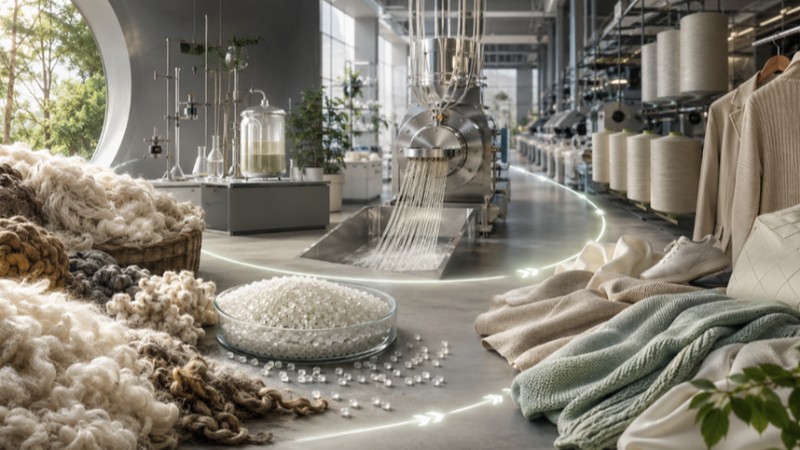
Everbloom, a fashion-tech startup developing protein-based textile materials, has raised about $8 million to support the next stage of its recycled fiber platform, according to public reports.
The company is working on a process that converts protein-rich waste streams, including wool, cashmere, and other keratin-based materials, into new textile fibers for potential use in luxury and performance applications. Publicly available information indicates that Everbloom is positioning the technology as a circular alternative to conventional animal-derived fibers.
Everbloom's Protein-Recycling Tech: From Waste to Melt-Spun Fibers
According to the company's public descriptions, Everbloom uses a protein-recycling process that breaks down waste materials and reprocesses them into fibers. It has also said that the materials can be converted into thermomeltable pellets, allowing them to be processed through standard melt-extrusion and melt-spinning equipment already used in the textile industry.
If validated at scale, that compatibility could lower the barrier to adoption for manufacturers. However, most of the available information remains company-led, and broader independent verification of performance claims is still limited.
Commercial Roadmap: Scaling Production with Italian Heritage Mills
Everbloom also appears to be building industrial relationships through partnerships with established mills, including Filati Biagioli Modesto in Italy. Public reports suggest that these collaborations are intended to move the material from development toward more practical manufacturing use.
That said, public evidence does not yet show wide commercial deployment across the global apparel market. For now, the company appears to be an early-stage material innovator rather than an established supply-chain standard.
Industry Impact: Driving Circular Material Innovation in Fashion
The financing adds momentum to a growing segment of textile innovation focused on converting waste into higher-value materials. In an industry under pressure to reduce environmental impact, recycled and bio-based fiber solutions continue to attract attention from brands and investors looking for circular sourcing options.
At the same time, claims about fiber softness, durability, and performance should be treated carefully until they are supported by independent testing and repeated commercial use.
Future Outlook: Scaling Bio-Based Fibers for Luxury Supply Chains
The key questions now are whether Everbloom can scale production, prove consistent fiber quality, and expand beyond early partnerships. Another important issue is whether the company can demonstrate repeatable performance data that meets the requirements of apparel manufacturers and luxury supply chains.
If those milestones are reached, Everbloom could emerge as a notable player in the circular materials space. For now, it remains a promising startup with a differentiated materials story and a commercial path that is still taking shape.