How Heatwaves Are Changing Cooling Fabrics in Apparel
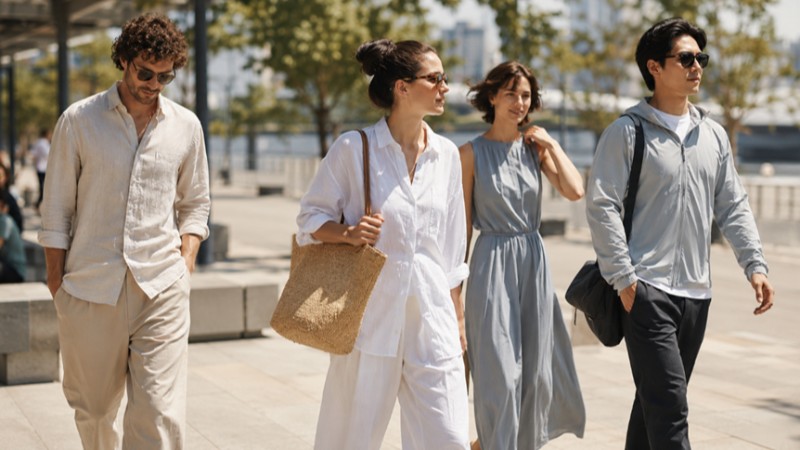
What Are Cooling Fabrics in Clothing
Cooling fabrics are clothing materials designed to help the body feel cooler by managing heat, sweat, airflow, or sunlight exposure. They are not one single type of fabric. A cooling fabric can be a breathable natural material, a moisture wicking synthetic knit, a UV protective textile, or a more advanced fabric using phase change materials.
That is why the term “cooling fabrics” can feel a little broad. Sometimes it means a loose linen shirt. Sometimes it means a polyester sports shirt that moves sweat away from the skin. In newer textile development, it can also refer to fabrics engineered to reflect sunlight, absorb heat, or regulate temperature more actively.
The important point is this: cooling fabric for clothing is becoming less of a sportswear feature and more of an everyday apparel requirement. As heatwaves become more frequent and more intense, people are no longer asking only what looks good in summer. They are asking what actually helps them stay comfortable.
What makes a fabric feel cool in hot weather
A fabric feels cool in hot weather when it supports airflow, moves moisture, reduces heat buildup, or limits sun exposure.
Breathable fabrics for summer usually allow warm air and body moisture to escape instead of trapping them next to the skin. Lightweight cotton, linen, lyocell, open knits, mesh structures, and some technical synthetics can all feel cooler depending on the situation.
But “cool” is not just one thing. A fabric may feel cool because it is airy. Another may feel cool because it dries fast. A third may feel cool because it blocks UV rays while staying light enough to wear outdoors. That is why apparel brands are now looking at cooling performance as a system, not just a single fiber choice.
Are cooling fabrics only used in sportswear
No, cooling fabrics are no longer limited to sportswear.
For years, moisture wicking fabric and quick dry synthetic materials were mostly associated with running shirts, gym wear, cycling jerseys, and hiking apparel. That is changing. Cooling fabrics are now moving into commuter clothing, travel apparel, workwear, summer basics, dresses, button shirts, and even business casual wardrobes.
Recent fashion coverage has also pointed out that brands and textile technology companies are adapting to heatwave dressing by using lightweight fibers, Tencel, linen, cotton, UV protection, moisture management, and phase change technologies in more mainstream clothing categories.
This shift matters because cooling comfort is becoming a normal expectation in apparel, not an optional performance label.
Why Are Heatwaves Making Cooling Fabrics More Important
Heatwaves are making cooling fabrics more important because high temperatures are changing what people expect from clothing. In the past, summer apparel mainly meant lighter colors, thinner fabrics, and looser shapes. Now, consumers are looking more closely at fabric performance.
They want clothing that can handle sweat, sun exposure, humidity, commuting, outdoor work, travel, and long hours in hot indoor spaces. That is a very different requirement from traditional seasonal fashion.
This is why heatwave clothing materials are becoming a serious topic for the textile and apparel industry. It is not just about style anymore. It is about how fabric behaves under real heat stress.
Why are consumers searching for heatwave clothing
Consumers are searching for heatwave clothing because extreme heat makes fabric choice feel practical, immediate, and personal.
A shirt that looks fine in mild summer weather may feel sticky, heavy, or suffocating during a heatwave. Cotton may feel comfortable at first, but if it becomes soaked with sweat, it can stay damp for a long time. Polyester may wick moisture, but some versions can trap heat or hold odor. Linen may feel airy, but it wrinkles easily. There is no perfect fabric for every hot-weather situation.
This is exactly why search demand around phrases like best fabrics for hot weather, breathable fabrics for summer, cooling clothes, moisture wicking fabric, and UV protective fabric is becoming more useful for apparel content.
Users are not just asking “What is cool fabric?” They are really asking, “What should I wear when the weather is too hot for normal clothing?”
Why are apparel brands changing summer materials
Apparel brands are changing summer materials because traditional warm-weather clothing is not always enough for more extreme heat.
A basic lightweight shirt may be fine for a normal summer day. But during a heatwave, clothing has to do more. It may need to breathe, dry quickly, protect from UV exposure, reduce cling, and still look appropriate for work or daily life.
This is pushing brands to borrow ideas from outdoor and sportswear, then apply them to everyday apparel. Lightweight constructions, moisture management, sun protection, heat regulation, and breathable blends are all becoming part of broader material development.
The market direction supports this. Fortune Business Insights estimated the global cooling fabrics market at USD 2.31 billion in 2025 and projected it to reach USD 3.57 billion by 2034, while other market estimates also point to steady growth in cooling textiles and performance apparel.
In other words, cooling fabrics are not just a seasonal trend. They are becoming a growth category inside apparel materials.
How Do Cooling Fabrics Actually Work
Cooling fabrics work in several different ways. Some improve airflow. Some move sweat away from the skin. Some reflect sunlight or provide UV protection. More advanced materials may absorb and release heat to help regulate temperature.
This is where many articles get too vague. “Cooling” can mean different things depending on the material, structure, and wearing environment.
A good cooling fabric for clothing should be judged by the actual scenario: dry heat, humid heat, direct sun, indoor heat, intense movement, or everyday commuting.
How does breathability help clothing stay cool
Breathability helps clothing stay cool by allowing air and moisture vapor to move through the fabric.
In simple terms, breathable fabrics let heat escape instead of holding it against the body. Linen is often valued in hot weather because its structure tends to feel open and airy. Lightweight cotton can also feel comfortable, especially when the fabric is thin and not too densely woven. Lyocell and Tencel fabrics are often used in summer apparel because they can feel smooth, breathable, and comfortable against the skin.
Fabric structure matters as much as fiber. A loose weave, open knit, mesh panel, or textured surface can improve airflow. A dense fabric made from a “cool” fiber may still feel warm if air cannot pass through it.
So when users search for breathable fabrics for summer, the best answer is not just a list of fiber names. The real answer is fiber plus structure plus garment fit.
How does moisture wicking fabric cool the body
Moisture wicking fabric helps cool the body by moving sweat away from the skin so it can evaporate more efficiently.
This is why many activewear fabrics use polyester or nylon. These synthetic fibers do not absorb moisture in the same way cotton does, so they can move sweat across the fabric surface and dry faster. For exercise, travel, hiking, or humid city commuting, moisture wicking fabric can be useful.
But there is a catch. Wicking does not always mean “cooler” in every situation. If the fabric is dense, poorly ventilated, or worn in very humid weather where evaporation is slow, the cooling effect may be limited. Some synthetic fabrics can also hold odor or feel less comfortable for sensitive skin.
Recent consumer advice on extreme heat has made a similar distinction: natural fibers such as linen and cotton can be breathable, while polyester and nylon may wick moisture but can also trap heat or cause discomfort in some conditions.
That is why moisture wicking should be treated as one cooling tool, not the whole answer.
How do phase change materials and UV fabrics work
Phase change materials in clothing work by absorbing, storing, and releasing heat as they change physical state. In apparel, these materials are usually used to help buffer temperature changes rather than create an icy feeling.
For example, phase change materials may absorb excess body heat when the wearer gets warm, then release heat when the temperature drops. This makes them more about thermal regulation than simple cooling.
UV protective fabric works differently. It helps reduce exposure to ultraviolet radiation from sunlight. For heatwave clothing, this matters because many people need protection during outdoor commuting, sports, travel, or work. A lightweight long-sleeve UV protective fabric may sometimes be more practical than exposing skin directly to strong sun.
The next stage of cooling apparel will likely combine multiple approaches: breathability, moisture management, UV protection, lighter constructions, and selective thermal regulation. That combination is what makes cooling fabrics more serious than a basic summer fabric list.
Which Materials Are Best for Heatwave Clothing
The best materials for heatwave clothing depend on the environment and the activity. There is no single “best cooling fabric” for every person or every climate.
A fabric that works well in dry heat may not work as well in humid heat. A fabric that is great for running may feel too sporty for office clothing. A natural fabric may feel more comfortable on the skin, while a synthetic performance knit may dry faster after sweating.
This is why users need material guidance by scenario, not just a ranking.
Are natural fabrics better for hot weather
Natural and regenerated cellulose fabrics are often better for everyday hot-weather comfort, especially when airflow and skin feel matter most.
Linen is one of the strongest choices for hot dry weather because it is light, breathable, and does not cling tightly to the body. Lightweight cotton works well for casual summer clothing, though it can become heavy when soaked with sweat. Lyocell and Tencel are also popular in summer apparel because they offer smooth hand feel, comfort, and good drape.
These fabrics are especially useful for everyday clothing such as shirts, dresses, wide-leg pants, loose tops, and summer basics.
Still, natural does not automatically mean best. Heavy cotton, dense knits, and tight weaves can feel warm. The cooling effect depends on fabric weight, structure, fit, and moisture behavior.
Are synthetic cooling fabrics better than cotton
Synthetic cooling fabrics can be better than cotton for active use, but they are not always better for everyday wear.
Polyester and nylon technical fabrics are useful when fast drying and sweat movement matter. That makes them strong choices for activewear, travel clothing, hiking shirts, and some workwear. If someone is moving a lot and sweating heavily, a moisture wicking synthetic fabric may outperform regular cotton.
Cotton, however, often feels more natural and comfortable for low-intensity daily wear. It breathes well when lightweight, but it absorbs moisture and may dry slowly. So the choice is less about “synthetic vs cotton” and more about use case.
For exercise or heavy sweating, synthetic moisture wicking fabric may be better. For relaxed summer wear, lightweight cotton, linen, or lyocell may feel better.
What is the best fabric choice for different heat scenarios
The best fabric choice depends on the type of heat and how the clothing will be worn.
Heat scenario | Better material direction |
Hot dry weather | Linen, lightweight cotton, open-weave fabrics |
Hot humid weather | Lyocell, breathable knits, quick-dry moisture management fabrics |
Outdoor sun exposure | UV protective fabric, lightweight long sleeves, breathable woven structures |
Daily commuting | Lightweight blends, breathable summer fabrics, wrinkle-resistant cooling fabrics |
Activewear | Moisture wicking polyester or nylon blends |
Office or business casual | Light wool blends, Tencel blends, airy cotton or linen blends |
Travel clothing | Quick-dry blends, breathable knits, odor-conscious materials |
This table also shows why heatwave clothing materials are becoming more complex. Consumers need garments that match real conditions, not just marketing words.
What Does This Mean for the Future of Apparel Materials
Cooling fabrics are likely to become more common in everyday apparel because heat is becoming a normal design condition. Summer clothing can no longer rely only on thin fabric and short sleeves.
The future of cooling apparel will probably focus on better material combinations. Think breathable structures with moisture management. UV protective fabrics that still feel soft. Natural fibers blended with performance synthetics. Phase change materials used carefully where they actually improve comfort.
In short, apparel materials are being asked to do more.
Will cooling fabrics become standard in everyday apparel
Yes, cooling fabrics are likely to become a standard part of everyday apparel, especially in regions facing longer and hotter summers.
This does not mean every shirt will become a high-tech cooling garment. It means cooling performance will become part of normal material selection. A summer shirt may be judged by breathability. A commuter pant may need better airflow. A travel dress may need wrinkle resistance and moisture comfort. A work uniform may need UV protection and heat stress management.
Cooling fabrics are becoming mainstream because climate pressure is changing the basic expectations of clothing.
What should apparel brands and fabric buyers watch next
Apparel brands and fabric buyers should watch five areas closely: breathable fabric structures, moisture wicking fibers, UV protective fabric, phase change materials in clothing, and low-impact cooling technologies.
The biggest opportunity is not just making fabrics cooler. It is making them comfortable, durable, washable, affordable, and suitable for real wardrobes.
That is where the content gap still exists. Many articles tell consumers to wear linen or buy performance shirts. Fewer explain how heatwaves are changing apparel material development at the industry level.
For textile professionals, this shift is important. Cooling fabrics are no longer just about sportswear. They are becoming part of how the apparel industry responds to climate, comfort, and everyday wearability.
Key Takeaways
Cooling fabrics are clothing materials designed to manage heat, sweat, airflow, or sun exposure. They may include breathable natural fabrics, moisture wicking synthetic knits, UV protective fabrics, or advanced textiles using phase change materials.
Heatwaves are making these fabrics more important because consumers now expect apparel to perform in hotter, more uncomfortable conditions. The best fabrics for hot weather depend on the scenario: linen and lightweight cotton for airflow, lyocell for smooth comfort, technical synthetics for sweat management, and UV protective fabrics for outdoor exposure.
The bigger trend is clear. Cooling fabrics are moving from sportswear into mainstream apparel, and heatwave clothing materials will become a more important part of textile development in the years ahead.