Color Fastness Test Guide: Methods, Standards, and Procedures
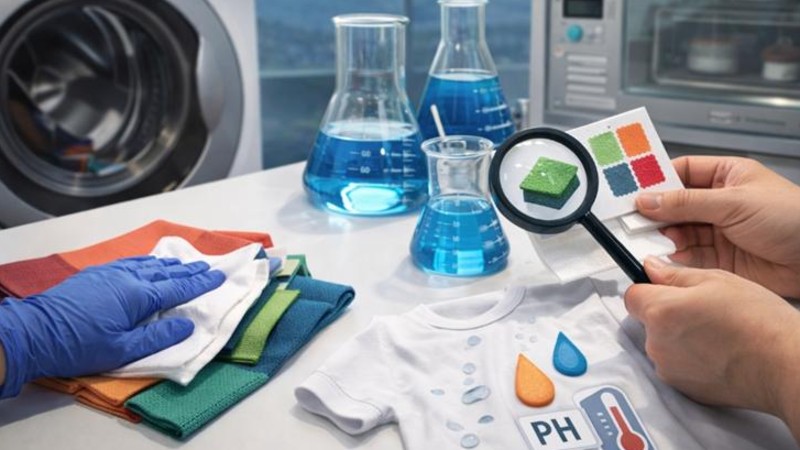
Ever pulled a bright red shirt from the wash only to find it’s now pink and has tinted your white socks? That’s a color fastness failure. This color fastness test guide will walk you through everything you need to know, from the core science to the specific tests that keep fabrics looking new. We’ll cover the key methods, international standards, and why this testing is non-negotiable for any quality textile.
What is Color Fastness Testing? Defining the Core Concept
Color fastness testing evaluates how well a fabric’s dye resists fading or transferring when exposed to specific conditions like washing, light, or friction. It’s a quality checkpoint that simulates real-world wear to predict a product’s performance before it reaches the consumer.
The Science Behind Color Loss and Transfer
Color loss happens when dye molecules break down due to energy from light or chemicals. Transfer occurs when loose dye particles physically migrate from one fabric to another. The bond between the dye and the fiber isn’t permanent enough to withstand the stress it’s put under.
Key Terms: Lightfastness, Wash Fastness, Rub Fastness, and More
These terms specify what stress is being tested. Lightfastness measures resistance to sunlight. Wash fastness checks laundering effects. Rub fastness (or crocking) tests for color transfer from friction. Each type addresses a different potential failure point.
The Critical Importance of Color Fastness in Textiles
This isn't just about aesthetics. Rigorous testing protects your investment, your brand, and your customers.
Consumer Satisfaction and Brand Reputation
A garment that bleeds or fades after one wash leads to instant disappointment, negative reviews, and returns. Consistent color performance builds trust and turns customers into advocates for your brand.
Meeting Regulatory and Safety Standards
Standards like OEKO-TEX or regulations like the CPSIA often include color fastness criteria, especially for items like children’s wear. It ensures dyes aren’t just safe initially, but also won’t migrate onto skin in harmful amounts during use.
Ensuring Product Durability and Value
Color integrity is a direct indicator of overall quality. A fabric that retains its color is often more durable, giving the product a longer lifespan and better value for money.
How Color Fastness Testing Works: An Overview of the Procedure
While each test method differs, they generally follow a three-stage process. Understanding this flow demystifies the color fastness test procedure.
Step 1: Sample Preparation and Conditioning
Samples are cut to precise dimensions and conditioned in a standard atmosphere (e.g., 65% humidity, 20°C) to eliminate environmental variables that could skew results.
Step 2: Simulating Real-World Stressors
The sample is subjected to a controlled, accelerated version of a real-world stress. This could be in a laundering device, a xenon-arc lamp chamber for light, or a crockmeter for rubbing.
Step 3: Evaluation and Grading Against Standards
After exposure, the sample is assessed for any color change. An adjacent white fabric is checked for staining. Results are compared to standardized grey scales and given a grade.
Common Color Fastness Test Methods and Their Standards
Here’s a breakdown of the most critical tests you’ll encounter. International standards (ISO) and American standards (AATCC) provide the specific protocols.
Color Fastness to Washing (ISO 105-C06, AATCC 61)
This test simulates domestic or industrial laundering. Fabric samples are sewn with multifiber strips (to detect staining) and agitated in a solution of detergent at set temperatures and times. It predicts how a garment will behave in the laundry.
Color Fastness to Light (ISO 105-B02, AATCC 16)
Samples are exposed to intense simulated sunlight from a xenon-arc lamp. Their fading is compared to a set of Blue Wool reference standards (L1-L8) to assign a lightfastness grade. Crucial for curtains, upholstery, and outdoor apparel.
Color Fastness to Rubbing/Crocking (ISO 105-X12, AATCC 8)
A white square of cloth is rubbed against the test fabric using a mechanical crockmeter, both dry and wet. The amount of color transferred to the white cloth is graded. Essential for denim, upholstery, and any printed fabric.
Color Fastness to Perspiration (ISO 105-E04, AATCC 15)
Fabric is treated with artificial acidic and alkaline perspiration solutions, then placed under pressure and heated. This tests color stability against body sweat, a key concern for activewear and dress shirts.
Color Fastness to Water and Sea Water (ISO 105-E01, E02)
Samples are immersed in distilled water or a synthetic sea water solution, then pressed between glass plates. This evaluates bleeding and staining for swimwear, sportswear, and linens.
Interpreting Test Results: Understanding the Grading Scales
Knowing how to test color fastness of fabric is one thing; understanding the report is another.
The Grey Scale for Staining and Color Change
Two dedicated grey scales are used. One measures the change in the original fabric’s color (Grey Scale for Color Change). The other measures the degree of staining on adjacent white fabric (Grey Scale for Staining). Both use a 1-5 rating, where 5 is perfect (no change/no stain) and 1 is a severe failure.
What Do the Grades Mean for Product Performance?
A Grade 4-5 is excellent, indicating high durability suitable for everyday use. Grade 3 is often the minimum commercial pass for many items but may show slight fading or staining over time. Grades 1-2 are poor and typically unacceptable for sale.
Best Practices for Effective Color Fastness Testing
To get reliable, actionable data, follow these guidelines.
Selecting the Right Tests for Your Product
Base your test selection on the product’s end-use. Children’s sleepwear needs rigorous wash and perspiration tests. Outdoor furniture requires robust lightfastness testing. A swimsuit needs water and chlorine resistance checks.
Working with Accredited Testing Laboratories
Always use labs accredited to ISO/IEC 17025. This ensures they follow standardized methods, use calibrated equipment, and provide results that are legally defensible and trusted by retailers globally.
The Future of Color Fastness: Trends and Innovations
The field isn't static. New demands and technologies are shaping how we think about color durability.
Digital and Instrumental Assessment Advancements
While visual assessment is standard, spectrophotometers and advanced software are becoming more common. They provide objective, numerical color difference values (ΔE), reducing human error and increasing consistency in grading.
Sustainability and the Drive for Eco-Friendly Dyes
The push for sustainable textiles is driving innovation in dye chemistry. The challenge is developing high-performance, eco-friendly dyes that don’t compromise on fastness, ensuring vibrant colors that last without harming the environment.
FAQ Section: Your Color Fastness Test Guide Questions Answered
What is the most important color fastness test for everyday clothing?
Wash fastness is typically the most critical, as it directly relates to consumer care. Perspiration and rub fastness are also highly important for garments worn against the skin.
How can I test color fastness at home before buying or washing a garment?
Rub a damp white cloth firmly on a hidden seam or hem. If color transfers, the rub fastness is poor. For wash fastness, soak a snippet in warm water with a bit of detergent; if the water colors, the dye may bleed in the wash.
What does a poor color fastness grade mean for the safety of the fabric?
It can indicate that dyes are not properly fixed. This may increase the risk of dye migration onto skin, which could be a concern for individuals with sensitivities or for items like infants' clothing where dye ingestion is a risk.
Are there different color fastness standards for organic cotton or other natural fibers?
The performance standards (the grades required) are generally the same. However, achieving those grades with natural dyes or on certain fibers can be more challenging, requiring specialized dyeing processes.
How often should a textile manufacturer perform color fastness tests on their products?
Testing should be done with every new dye lot, fabric batch, or significant production change. Regular audits, even on established products, are also wise to ensure ongoing supplier and process consistency.