Second-Hand Fashion Drives New Business Models in the Global Textile Industr
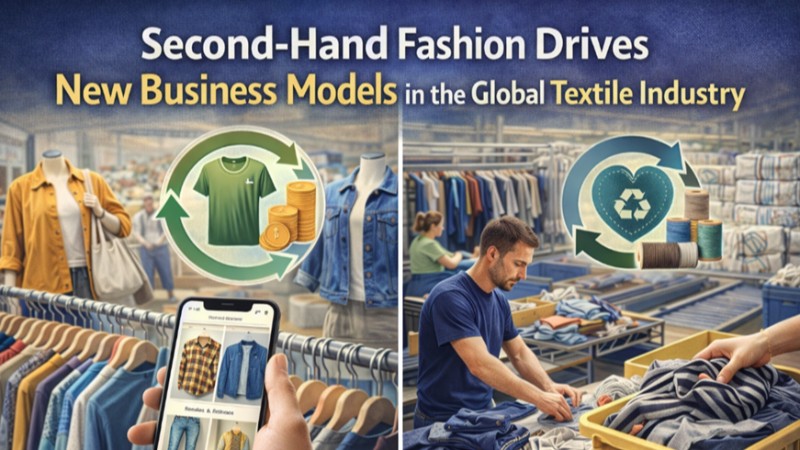
The rapid growth of the second-hand fashion market is creating new opportunities and challenges for the global textile industry. As consumers become more conscious of sustainability and value, resale platforms and circular fashion models are gaining increasing attention across the apparel supply chain.
Industry analysts note that the expansion of second-hand clothing platforms is reshaping traditional retail and production strategies. Instead of relying solely on new product sales, many fashion brands are now exploring resale programs, repair services, and garment recycling initiatives.
Circular Fashion Becomes a Key Industry Trend
The rise of second-hand fashion reflects broader changes in consumer behavior. Many shoppers are seeking more sustainable alternatives, choosing pre-owned garments to reduce waste and extend the life cycle of clothing products.
This shift is encouraging fashion companies to adopt circular fashion strategies, where garments remain in use for longer periods through resale, refurbishment, or recycling.
For the garment industry, this development is prompting companies to rethink product design and material selection. Durable fabrics, traceable materials, and easier recycling processes are becoming increasingly important in modern apparel production.
Brands Experiment With New Revenue Models
As resale markets expand, brands are testing new business models that combine traditional retail with circular services. Some companies are launching official resale platforms that allow customers to trade or resell previously purchased items.
Others are introducing take-back programs that collect used garments and return them to the apparel supply chain for reuse or recycling.
These initiatives not only support sustainability goals but also help brands maintain long-term relationships with customers while creating additional revenue streams.
Implications for the Textile and Apparel Supply Chain
The growth of second-hand fashion is likely to influence multiple stages of the textile industry, from raw material sourcing to garment manufacturing and retail distribution.
Manufacturers may need to adapt to new requirements such as product durability, traceability, and recyclability. At the same time, supply chain transparency and digital tracking technologies are expected to play a larger role in supporting circular fashion systems.
Industry observers believe that the continued expansion of resale markets will encourage companies across the apparel supply chain to develop more sustainable and flexible business models in the coming years.
Source: Adapted from reporting by Textile World