Breathable Polyester Spandex Fabric for Performance Activewear
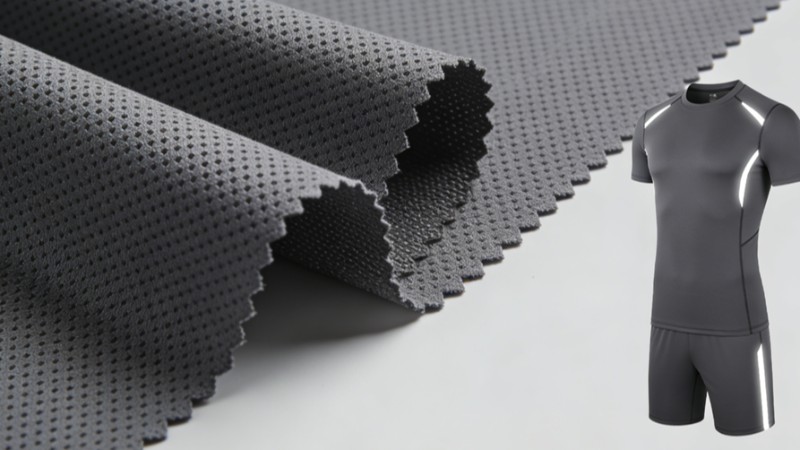
Modern performance activewear relies on engineered textiles to meet intense physiological demands. Among these, breathable polyester spandex fabric has become a cornerstone, offering a critical balance of moisture management, mechanical stretch, and durability. Its dominance is not accidental but a result of specific fiber properties and fabric constructions that address core athletic needs.
Understanding the technical interplay between polyester and spandex reveals why this blend is the best fabric for workout clothes. The combination creates a high performance stretch fabric that supports dynamic movement while actively managing the microclimate between skin and garment.
How Breathable Polyester Spandex Fabric Manages Moisture
Breathability in athletic contexts refers to a fabric's ability to facilitate vapor transfer and liquid dispersal. Polyester, a synthetic polymer, is inherently hydrophobic. This property is leveraged in moisture wicking polyester spandex through two primary mechanisms: capillary action and surface area.
Engineered polyester fibers are often shaped with micro-channels or have a cross-section designed to pull sweat away from the skin via capillary action. The moisture spreads across a large surface area on the exterior of the fabric, where it evaporates rapidly. The inclusion of spandex (typically 5-20%) does not hinder this process when the knit or weave structure is designed for airflow.
The Mechanics of Four-Way Stretch in Athletic Fabric
An athletic fabric with four way stretch must provide elongation and recovery both lengthwise (warp) and widthwise (weft). This is achieved through the knit construction and the elastic properties of spandex.
Spandex filaments, often wrapped with polyester in the core-spun yarn, provide the molecular-level recovery. The fabric structure, commonly a circular knit like jersey or interlock, is engineered to yield in all directions. This allows for unrestricted motion—critical for lunges, twists, and reaches—while maintaining garment shape and compression over time.
Key Performance Parameters of Stretch Fabric
Not all stretch is equal. Performance is measured by specific parameters:
Elongation at Break: The percentage a fabric can stretch before tearing. High-performance knits often exceed 150%.
Power & Recovery: The force the fabric exerts when stretched (compression) and its ability to return to original dimensions.
Growth Resistance: The ability to resist permanent deformation after repeated stretching cycles.
Polyester Spandex Mesh Fabric for Enhanced Ventilation
For maximum airflow, polyester spandex mesh fabric is a specialized solution. Mesh constructions feature open, grid-like knits that drastically increase breathability. The technical challenge is integrating spandex to provide structural integrity to these open spaces without compromising their ventilating function.
This fabric is strategically placed in high-heat zones like underarms, the back, and sides. It acts as an active ventilation system, expelling warm, humid air from inside the garment while allowing cooler air to enter, making it a pinnacle of breathable polyester spandex fabric design.
Selecting the Right High Performance Stretch Fabric
Choosing the optimal fabric depends on the application's specific demands. Key selection criteria include:
| Activity Type | Fabric Weight | Spandex Percentage | Key Feature Priority |
|---|---|---|---|
| High-Intensity Training / Running | Lightweight (120-160 gsm) | 10-15% | Maximum moisture wicking, rapid dry time |
| Yoga / Pilates | Medium weight (180-220 gsm) | 15-20% | Exceptional four-way stretch, recovery, soft hand feel |
| Team Sports / Football | Medium-Heavy (220-260 gsm) | 8-12% | Durability, abrasion resistance, structural compression |
Fabric weight (grams per square meter or GSM) and the denier of the yarn directly influence durability, opacity, and thermal regulation. A proper balance ensures the fabric performs under stress without sacrificing comfort.
Final Considerations for Activewear Fabric
The evolution of breathable polyester spandex fabric continues with advancements in fiber engineering, such as recycled polyester and bio-derived spandex, addressing environmental concerns without sacrificing performance. The core principles remain: effective moisture transport, intelligent stretch, and durable construction.
For designers and manufacturers, the focus should be on matching the precise fabric construction—whether a standard moisture wicking polyester spandex knit or a specialized mesh—to the biomechanical and thermodynamic requirements of the end activity. This technical alignment is what ultimately defines superior performance in activewear.
FAQs about Breathable Polyester Spandex
Is polyester spandex fabric truly breathable?
Yes, when engineered for performance. Breathability comes from the knit structure and fiber treatment that enables capillary action, moving moisture to the fabric's surface to evaporate, not from the fiber itself being porous.
Why is polyester spandex better than cotton for workouts?
Cotton absorbs moisture but retains it, becoming heavy and slow to dry, which can lead to chills. Polyester spandex wicks moisture away and dries quickly, maintaining a stable body temperature and lighter garment weight.
How is four-way stretch different from two-way stretch?
Two-way stretch fabric elongates in one direction (usually along the width). Four-way stretch fabric stretches and recovers in both length and width, offering greater freedom of movement and a more conforming fit.
Can polyester spandex mesh fabric provide enough support?
Support comes from the fabric's compression and the garment's cut. Mesh is often integrated into panels within a garment made of more supportive, denser knit areas, providing targeted ventilation where support requirements are lower.