Crochet and Artisan Knits Gain Commercial Ground in Spring/Summer 2026
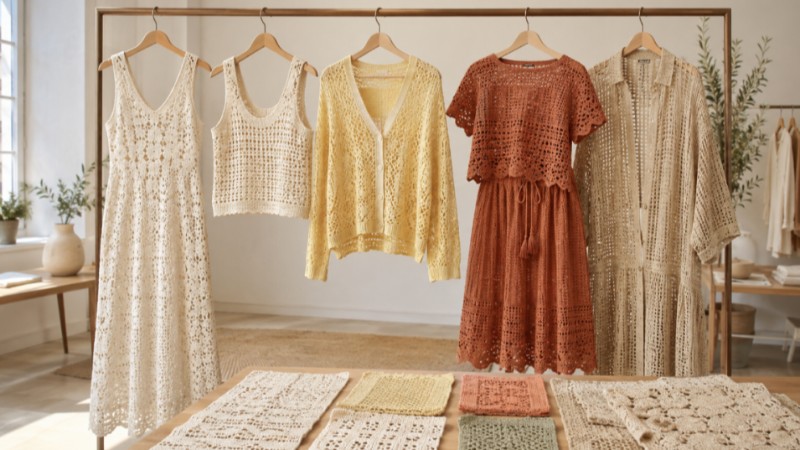
Crochet-inspired clothing and artisan knitwear have become prominent texture-driven categories for Spring/Summer 2026. Their presence across designer collections and mainstream retail reflects growing interest in tactile surfaces, handcrafted aesthetics and versatile warm-weather clothing.
From Resort Style to Everyday Fashion
Crochet was traditionally associated with beachwear, festivals and 1970s-inspired bohemian fashion. In 2026, it is moving into more polished categories, including fitted tops, coordinated sets, city dresses and occasionwear.
This development aligns with the wider SS26 focus on craftsmanship, authenticity and expressive surface design. Spring/Summer 2026 collections at Copenhagen Fashion Week featured crochet, lace and lightweight layered knits. Burberry also incorporated crochet dresses into its SS26 collection, combining artisanal textures with references to British music and festival culture.
The trend now extends beyond conventional resort dressing. Cleaner silhouettes, refined openwork patterns and neutral or softened colors make crochet-inspired garments suitable for a broader range of summer occasions.
Key Crochet Categories in Retail
ASOS, Zara, H&M and Free People have introduced crochet-inspired products across several categories:
· Cropped tops, tanks and halter tops
· Mini, midi and maxi dresses
· Matching shirts, shorts, skirts and trousers
· Openwork cardigans and lightweight sweaters
· Beach cover-ups, swimwear and accessories
Tops and dresses are particularly well suited to this trend because texture can transform a relatively simple silhouette. Coordinated sets offer another effective format, allowing consumers to wear the pieces together or style them separately.
Different retailers are also interpreting the trend according to their market positioning. Free People emphasizes bohemian and festival styling, while ASOS offers colorful separates and accessible matching sets. Zara uses crochet in more structured dresses and fashion-focused tops, and H&M applies crochet-look construction to lightweight seasonal pieces.
Crochet Is Becoming a Broader Fabric Aesthetic
In mass-market fashion, “crochet” does not always refer to traditional handwork. Authentic crochet is formed with a single hook and requires considerable manual labor. Many commercial garments instead use machine-made openwork knits that reproduce the texture and visual rhythm of handmade crochet.
Fiber composition also varies. Cotton and cotton-rich yarns support a natural, breathable appearance, while polyester, viscose and blended yarns can improve consistency, drape, durability or price accessibility.
For this reason, terms such as “crochet-inspired,” “crochet-look knitwear” and “artisan openwork knit” may describe the commercial category more accurately. Brands should reserve “hand-crocheted,” “pure cotton” and similar claims for products that meet those specifications.
Why Crochet Works for Warm-Weather Retail
Crochet-inspired clothing combines strong visual identity with seasonal functionality. Openwork structures can improve airflow, while pronounced texture gives garments dimension both in stores and in e-commerce photography.
The category also connects with several established fashion directions:
· Bohemian and festival dressing
· Mediterranean and resort style
· Romantic and nostalgic aesthetics
· Natural and craft-inspired design
· Coordinated summer separates
This versatility allows retailers to adapt the same design language across different customer groups and price segments.
Commercial Direction
The strongest product opportunity lies in combining artisanal character with practical wearability. Distinctive openwork patterns, scalloped edges, dimensional flowers and geometric motifs can create recognizable products without requiring overly complicated silhouettes.
Construction remains essential. Linings can make openwork dresses more versatile, while reinforced seams and stable edges help reduce stretching and snagging. Fiber composition should be selected according to the intended use: cotton-rich yarns for a natural summer feel, blended yarns for improved shape retention, and softer regenerated fibers where fluid drape is required.
Tops, dresses and coordinated sets are likely to remain the most commercially adaptable formats. Machine-produced crochet-look knitwear provides the scale and design consistency required by mainstream retailers, while genuine hand-crocheted pieces are better positioned as premium, limited-production or craft-led products.
For apparel businesses, the central opportunity is not crochet alone but the broader demand for visible texture and modern craftsmanship. Products that combine distinctive surface design, comfort, durability and accurate material communication can translate the SS26 artisan trend into a clear and credible retail proposition.