Bio-Based Elastane Moves Closer to Commercial Use in Performance Fabrics
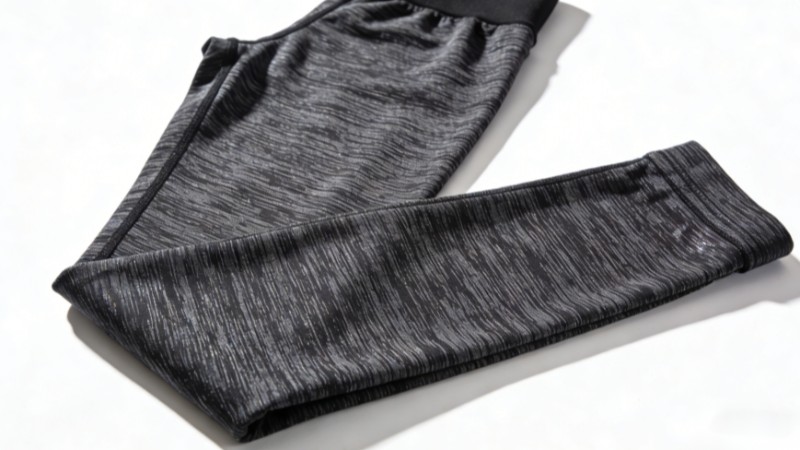
Bio-based elastane is moving out of the laboratory and into industrial-scale production, marking a significant milestone for the performance textile industry. Long viewed as a technical challenge due to elastane’s complex chemistry and demanding performance requirements, bio-based alternatives are now approaching commercial readiness—particularly for activewear, intimates, and stretch denim.
One of the most closely watched developments comes from Hyosung TNC, a global leader in spandex production, in collaboration with biotechnology firm Geno. Together, the companies are advancing regen™ BIO Elastane, a partially bio-based elastane derived from plant-based feedstocks.
From Lab Concept to Industrial Scale
Unlike polyester or nylon, elastane (also known as spandex) has historically been difficult to decarbonize. Its production relies heavily on fossil-based chemical intermediates, making bio-based substitution far more complex than simply switching raw materials.
The regen™ BIO Elastane project addresses this challenge by using bio-based BDO (butanediol) produced from sugarcane-derived feedstocks. According to information released by the companies, this approach can reduce the carbon footprint of elastane production by up to 55% compared with conventional fossil-based spandex.
Crucially, the project has now moved beyond pilot-scale validation. Hyosung TNC has committed approximately USD 1 billion in investment to expand production capacity at its Vietnam manufacturing facilities, signaling confidence in large-scale commercialization.
• Planned commercial production: Q2 2026
• Expected retail market availability: 2027
• Target applications: activewear, underwear, shapewear, and stretch denim
This transition from early-stage development to industrial deployment represents a meaningful shift for bio-based elastane, which for years remained confined to experimental or limited demonstration projects.
Performance Parity Comes First
For elastane, sustainability alone is not enough. The fiber’s value lies in its exceptional stretch, recovery, and durability, and any alternative must meet the same demanding standards.
According to company disclosures, regen™ BIO Elastane is engineered to match the core performance characteristics of conventional spandex, including elongation, recovery, and long-term shape retention. This is especially critical for performance apparel, where fabric failure is immediately noticeable to end users.
That said, industry experts note that cost structure and elastic recovery over extended use remain key challenges as bio-based elastane moves toward broader adoption. While performance parity is reportedly achievable, scaling production efficiently and maintaining consistent quality at volume will ultimately determine how quickly brands integrate the fiber into mainstream collections.
Why Bio-Based Elastane Matters for the Apparel Industry
The significance of bio-based elastane goes beyond a single fiber innovation. Elastane is used in the majority of modern stretch garments, even when it accounts for only 5–10% of fabric composition. This means its environmental impact is disproportionately large relative to its volume.
For apparel brands and fabric developers, a commercially viable bio-based elastane offers several strategic advantages:
• Lower lifecycle carbon footprint without sacrificing garment performance
• Compatibility with existing fabric constructions, including polyester-spandex and nylon-spandex blends
• Broader sustainability gains, as elastane is often the limiting factor in recycling or low-impact material strategies
As a result, elastane is increasingly viewed as one of the final “hard-to-abate” components in performance textiles—making progress in this area particularly meaningful.
Early Adoption Focus: Performance and Stretch Applications

Initial applications for bio-based elastane are expected to focus on categories where function justifies material innovation, including:
• High-performance activewear
• Intimate apparel and shapewear
• Stretch denim and fitted garments
These segments place a premium on stretch consistency and recovery, while also facing growing pressure from brands and consumers to reduce environmental impact.
A Measured Step Toward Sustainable Stretch Fabrics
While regen™ BIO Elastane does not represent a complete replacement for conventional spandex, it marks a clear turning point: bio-based elastane is no longer theoretical. With defined production timelines, substantial capital investment, and targeted commercial applications, the fiber is entering a phase of real-world validation.
In the near term, adoption is likely to be gradual, driven by performance-focused brands willing to test new materials. Over time, as production scales and cost structures improve, bio-based elastane could become a foundational component in next-generation sustainable performance fabrics.
For the textile industry, this development underscores a broader shift—one where sustainability is increasingly measured not by marketing claims, but by verified material innovation that performs at scale.