French Terry vs. Terry Cloth: Key Differences, GSM Guide & Sourcing Tips for Apparel Brands
Introduction
Choosing the right fabric can directly affect how a product feels, performs, and sells. For apparel brands, one common sourcing question is the difference between French Terry and terry cloth.
The confusion is understandable. Both fabrics use looped yarn structures and are known for softness and comfort. However, they are made differently and serve different purposes.
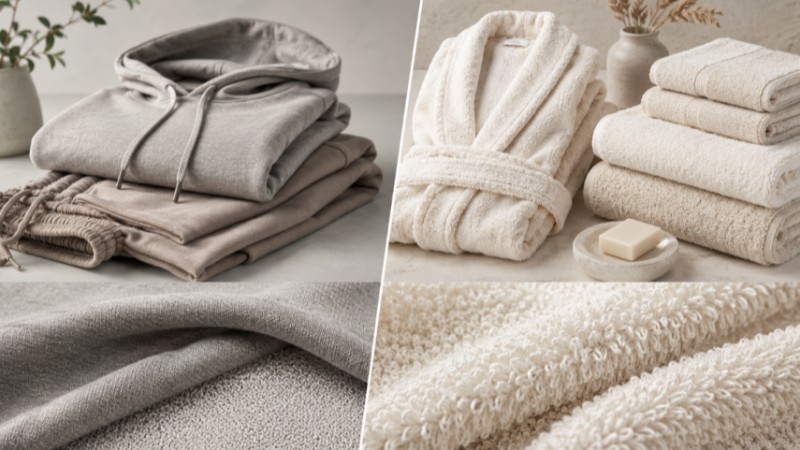
French Terry is mainly an apparel fabric used for hoodies, joggers, sweatshirts, and casualwear. Traditional terry cloth, also called woven terry or towel terry, is designed for absorbency and is commonly used in towels, bathrobes, and spa textiles.
The difference is not just about appearance. Fabric construction affects stretch, weight, durability, moisture absorption, and production performance.
This guide explains the key differences between French Terry and woven terry cloth from a sourcing perspective.
Quick Comparison: French Terry vs. Terry Cloth
French Terry | Woven Terry Cloth | |
Construction | Knitted fabric | Woven fabric |
Surface | Smooth face with loopback interior | Raised loops on one or both sides |
Stretch | Natural mechanical stretch | Very limited stretch |
Typical GSM | 180–400 GSM | 300–800 GSM |
Best Uses | Hoodies, joggers, sweatshirts, activewear | Towels, bathrobes, spa products |
Main Advantage | Comfort and flexibility | Absorbency and durability |
1. The Main Difference: Knit vs. Woven Construction
The biggest difference between French Terry and terry cloth is how they are made.
French Terry is a knitted fabric, while traditional terry cloth is a woven fabric. This basic construction difference determines almost everything else, including stretch, hand feel, and end use.
Woven Terry Cloth (Towel Terry)
Traditional terry cloth is produced on looms using warp and weft yarn systems.
During production, additional yarn length creates the characteristic loops that give terry fabrics their high absorbency. These loops are usually present on one or both sides of the fabric, depending on the construction.
Because it is woven, terry cloth has a stable structure and very little natural stretch. It is ideal for products where moisture absorption and durability matter more than flexibility.
Typical applications include:
· Towels
· Bathrobes
· Spa textiles
· Beach products
· Hospitality textiles
French Terry (Knit Terry)
French Terry is produced using circular knitting machines. It has a smooth jersey surface on the outside and soft unbrushed loops on the inside.
Unlike woven terry, the loops are only on one side. This creates a lighter, more breathable structure that works well for garments worn directly against the body.
The knitted construction also gives French Terry natural flexibility, which is why it is widely used in casualwear and athleisure.
Typical applications include:
· Hoodies
· Sweatshirts
· Joggers
· Lounge sets
· Lightweight activewear
2. Choosing the Right GSM for Your Product
GSM (grams per square meter) is one of the first specifications buyers discuss with fabric mills. It affects thickness, warmth, drape, and overall product positioning.
Lightweight French Terry (180–240 GSM)
Suitable for:
· Spring and summer apparel
· Lightweight hoodies
· Baby clothing
· Layering pieces
It provides comfort and breathability without feeling heavy.
Mid-weight French Terry (250–350 GSM)
This is the most common range for premium hoodies, joggers, and everyday sweatshirts.
It offers a good balance between structure, softness, and durability.
Heavyweight Woven Terry (400–600+ GSM)
Usually selected for:
· Premium towels
· Bathrobes
· Spa products
Higher GSM generally means more thickness and absorbency, although yarn quality and loop construction also matter.
3. Fiber Composition and Sourcing Considerations
GSM is important, but it is not the only factor that determines fabric performance.
Cotton
100% cotton offers excellent softness, breathability, and moisture absorption.
However, cotton fabrics may shrink more and usually take longer to dry compared with synthetic blends.
Cotton-Polyester Blends
Adding polyester can improve:
· Dimensional stability
· Drying speed
· Wrinkle resistance
· Production consistency
Many commercial apparel products use cotton-polyester blends because they are easier to maintain.
Bamboo-Cotton Blends
Bamboo blends are often selected for premium baby products, luxury textiles, and soft-touch applications.
They are valued for their smooth hand feel and comfortable drape.
4. Common Production Challenges
Fabric selection is only the beginning. During production, brands should also consider several practical issues.
Shrinkage Control
Cotton-based terry fabrics can shrink after washing, especially when untreated.
Before bulk production, manufacturers should confirm dimensional stability through washing tests such as AATCC 135.
Common solutions include:
· Using pre-shrunk fabric
· Adjusting patterns based on expected shrinkage
· Selecting blended fabrics for improved stability
Color Consistency
Loop structures can affect how colors appear because light reflects differently from raised surfaces.
For larger production runs, brands should always:
· Approve lab dips before bulk dyeing
· Check colors under standardized lighting
· Maintain dye lot control
This step is especially important for premium apparel where color consistency affects brand perception.
Cutting and Lint Management
Woven terry can generate more lint during cutting because the process cuts through dense surface loops.
Manufacturers should maintain clean cutting environments and properly finish raw edges to reduce shedding.
French Terry generally creates fewer lint issues because its loops are contained inside the knitted structure.
5. FAQ: French Terry and Terry Cloth Sourcing
Can French Terry be used for towels?
Generally, no.
French Terry can absorb some moisture, but it does not match woven terry cloth in terms of loop density, absorbency, and long-term durability.
For towels and bath products, woven terry remains the preferred choice.
French Terry is better suited for garments where comfort, stretch, and breathability are more important.
Why does terry fabric become less soft after washing?
Loss of softness is usually related to washing conditions rather than the fabric itself.
Hard water minerals, detergent residue, and excessive fabric softener use can affect cotton fibers and reduce absorbency.
Proper care instructions can help maintain the original feel of terry products.
Which sewing needles work best for these fabrics?
For French Terry:
Use ballpoint or stretch needles, usually around 75/11–90/14 depending on fabric weight.
For woven terry:
A sharper needle around 90/14–100/16 is commonly used for heavier structures.
The exact choice depends on fabric thickness and machine settings.
Final Thoughts: Which Fabric Should Apparel Brands Choose?
The choice between French Terry and terry cloth depends on the product purpose.
Choose French Terry when you need:
· Soft everyday apparel
· Stretch and comfort
· Breathable sweatshirt fabrics
· Hoodies, joggers, and casualwear
Choose woven terry cloth when you need:
· High absorbency
· Dense loop structures
· Long-term durability
· Towels, bathrobes, and spa products
For apparel brands, understanding the difference between knit and woven terry helps avoid sourcing mistakes and ensures the fabric matches the final product experience.